Black-market oil buyers will push Venezuela for bigger discounts following US seizure – starving Maduro of much-needed revenue
Venezuela relies on the black-market oil trade for a large chunk of its revenue. US enforcement actions may push down the price it can charge, further squeezing the country’s economy.
Francisco J. Monaldi, Wallace S. Wilson Fellow in Latin American Energy Policy, Rice University
15 December 2025
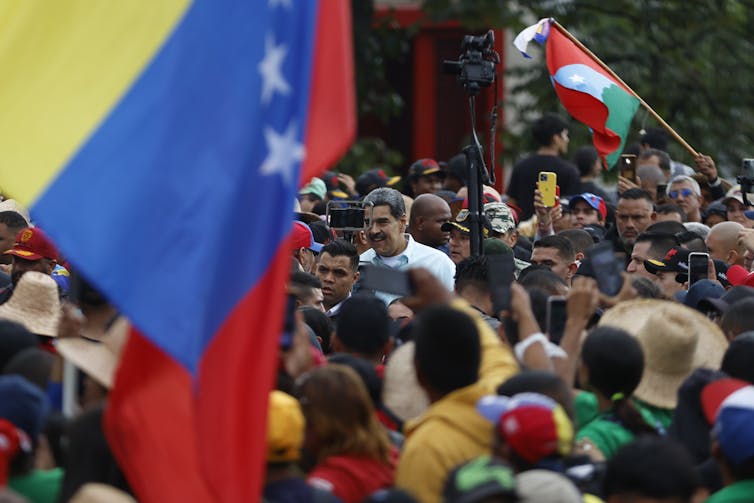
The U.S. seizure of an oil tanker off the Venezuelan coast looks designed to further squeeze the economy of President Nicolás Maduro’s country.
The Dec. 10, 2025, operation – in which American forces descended from helicopters onto the vessel – follows months of U.S. military buildup in the Caribbean and was immediately condemned by the Venezuelan government as “barefaced robbery and an act of international piracy.”
But what exactly is the Trump administraion’s aim in going after the tanker, and how could this impact the already beleaguered economy of Venezuela? The Conversation U.S. turned to Rice University’s Francisco J. Monaldi, an expert on Latin American energy policy, for answers.
According to the Trump administration, the vessel was heading to Cuba. But because of the size of the ship, I strongly suspect that the final destination was likely China – tankers the size of the seized one don’t tend to be used to take oil across the Caribbean to Cuba. The ones used for that task are far smaller.
Attorney General Pam Bondi released a video of the seizure on X.
So the latest U.S. seizure was, on the surface, unrelated to the sanctions placed on Venezuela by U.S. authorities in 2019 and expanded in 2020 to include secondary sanctions – that is, on countries that do business on the targeted nation or company.
As such, Venezuelan officials have said this is unprecedented. And they are largely right. While there have been a few occasions in which Iranian tankers have been seized due to sanctions busting, this is the first time that there has been a seizure of a vessel departing Venezuela and with a Venezuelan crew.
The Trump administration has signaled that it is not only seizing the cargo but the ship itself – which would represent a significant loss for the company owning the ship. The loss will be borne by the company, not Venezuela, as it was under a “Free on Board” contract, meaning that as soon as it left Venezuela the buyer takes responsibility for it.
Nonetheless, this is a significant escalation of the pressure campaign on Venezuela, which looks set to continue. Reuters has reported that around 30 other tankers near Venezuela have some kind of sanction against them. They form part of a large shadow fleet that try to skirt sanctions through hiding their identity while transporting oil from Russia, Venezuela and Iran.
The signal from U.S. officials is that they are prepared to go after more vessels and further squeeze Venezuela’s oil revenues through fresh sanctions.
How often they will seize vessels is not known, but the clear threat from the White House is that the U.S. will continue with this seizure campaign.
How important are oil exports to Venezuela?
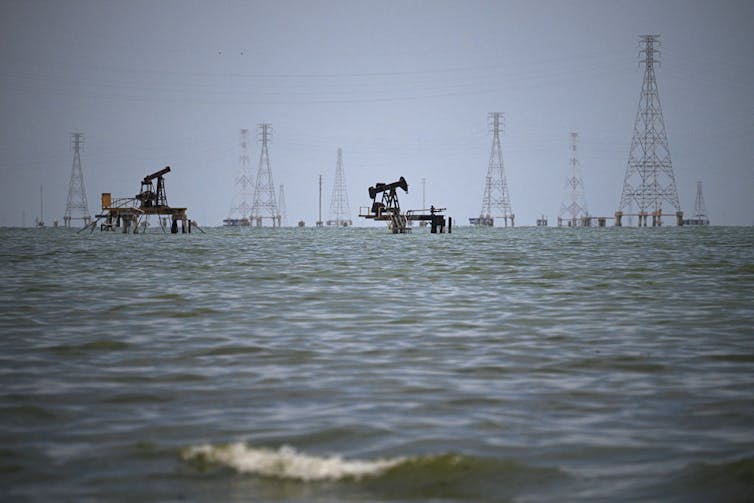
Venezuela’s economy is tremendously dependent on oil production.
We do not have exact figures, as the Venezuela government has not published them in seven years, but most analysts believe oil constitutes north of 80% of all of the country’s exports – some even put this figure above 90%.
Most of that oil goes to the black market, and a majority ends up with independent refiners in China. State-owned enterprises in China tend not to buy this oil because they do not want to fall foul of the sanctions regime. But Beijing tends to turn a blind eye to tankers heading to non-state entities, especially if those tankers have hidden their true identity so it doesn’t look like they are coming from Venezuela.
Venezuela’s economy itself is also very dependent on oil, with the sector making up about 20% of total GDP, more than any other industry. And when it comes to government income, the oil sector makes up north of 50%.
How has Venezuela’s oil sector been impacted?
It is important to know that even before U.S. sanctions began in 2019, Venezuela’s oil production was in severe decline.
In 1998, before Hugo Chávez, the leftist military officer who became a populist president, came to power, oil production peaked at around 3.4 million barrels a day. By the time Chávez died and Maduro succeeded him in 2013, it had fallen to 2.7 million barrels a day.
When U.S. sanctions targeting the state-owned oil company, Petróleos de Venezuela, were enacted in 2019, production was down to 1.3 million barrels a day – but that had already been affected by the other financial sanctions that came in two years earlier.
The oil sanctions of 2019 closed the U.S. market, taking away half a million barrels a day that at the time headed from Venezuela to the U.S. As a result, Venezuela had to increase oil sales to India and China.
But then the 2020 secondary sanctions, which apply to countries doing business with Venezuela, came in. As a result, Europe and India stopped buying Venezuelan oil, meaning that its only markets were Cuba and China. Of course, that year also saw the onset of the COVID-19 pandemic, which resulted in a massive cooling of the oil market globally.
Venezuelan oil production collapsed to 400,000 barrels a day that year. Today it has recovered to around 1 million barrels a day. This has been helped by the U.S. allowing Chevron – which, after Petróleos de Venezuela, is the second-largest oil company operating in the country – to continue production.
How does Venezuela get around oil sanctions?
Venezuela relies on a shadow fleet to help it skirt U.S. sanctions. These vessels hide their identity by using false flags and false names.
Companies often take a tanker that is going to be retired and change the identity, put on a new coat of paint and make sure transponders – devices that transmit radio signals to give a map reading – are doctored so that it looks like the ship is in a different place altogether.
These ships arrive in Venezuela, pick up oil and then set sail. Sometimes they then transfer the cargo to another ship – which carries huge environmental risks. And then it arrives typically in Malaysia, where it takes on a Malaysian identity and on it goes to China.
What impact has this seizure had on oil prices?
The seizure had little impact on global oil prices, because of exiting oversupply and due to the fact that Venezuela makes up only around 1% of the overall market. That could change, depending on how aggressive the U.S. gets. But the Trump administration will be mindful that it doesn’t want to see domestic prices rise as a result.
As to the price of Venezuelan oil, that could be more drastic. Venezuelan oil is already sold at a discount on the black market because of the existing risk relating to the sanctions. This latest action is likely to widen these discounts even further.
In addition, Venezuela has until now required companies to pay some of the payment for oil cargo upfront – and a lot will be unwilling to do so now, due to high costs involved in a U.S. seizure. For example, a tanker of 2 million barrels, even with the current discount, will be worth around US$100 millon – no one wants to risk that much money. So very few buyers will be willing to prepay. Instead they will expect Venezuela to share the risk.
The bottom line for Maduro is that the only way to get someone to buy Venezuelan oil amid the heightened risk of this moment is to offer higher discounts with fewer prepayments. Besides discounts, export volumes could also be affected and that in turn would lead to production cuts, which are costly to reverse.
And all this will further choke off the already limited revenue that Maduro is relying on to keep Venezuela’s government functioning.
Francisco J. Monaldi does not work for, consult, own shares in or receive funding from any company or organization that would benefit from this article, and has disclosed no relevant affiliations beyond their academic appointment.
This article is republished from The Conversation under a Creative Commons license.