‘It ain’t no unicorn’: meet the researchers who’ve interviewed 130 Bigfoot hunters
In this Q&A with the authors of a recent book about Bigfoot hunters, they admit these people are neither anti-science nor irrational.
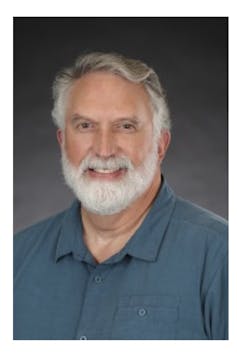
Jamie Lewis, Lecturer in sociology, Cardiff University, Andy Bartlett, Research Associate in Sociology, University of Sheffield
12 February 2026
It was the image that launched a cultural icon. In 1967, in the northern Californian woods, a seven foot tall, ape-like creature covered in black fur and walking upright was captured on camera, at one point turning around to look straight down the lens. The image is endlessly copied in popular culture – it’s even become an emoji. But what was it? A hoax? A bear? Or a real-life example of a mysterious species called the Bigfoot?
The film has been analysed and re-ananlysed countless times. Although most people believe it was some sort of hoax, there are some who argue that it’s never been definitively debunked. One group of people, dubbed Bigfooters, are so intrigued that they have taken to the forests of Washington, California, Oregon, Ohio, Florida and beyond to look for evidence of the mythical creature.
But why? That’s what sociologists Jamie Lewis and Andrew Bartlett wanted to uncover. They were itching to understand what prompts this community to spend valuable time and resources looking for a beast that is highly unlikely to even exist. During lockdown, Lewis started interviewing more than 130 Bigfooters (and a few academics) about their views, experiences and practices, culminating in the duo’s recent book Bigfooters and Scientific Inquiry: on the borderlands of legitimate science.
Here, we talk to them about their academic investigation.
What was it about the Bigfoot community that you found so intriguing?
Lewis: It started when I was watching either the Discovery Channel or Animal Planet and a show called Finding Bigfoot was advertised. I was really keen to know why this programme was being scheduled on what certainly at the time was a nominally serious and sober natural history channel. The initial plan was to do an analysis of these television programmes, but we felt that wasn’t enough. It was lockdown and my wife was pregnant and in bed a lot with sickness, so I needed to fill my time.
Bartlett: One of the things that I worked on when Jamie and I shared an office in Cardiff was a sociological study of fringe physicists. These are people mostly outside of academic institutions trying to do science. I was interviewing these people, going to their conferences. And that led relatively smoothly into Bigfoot, but it was Jamie’s interest in Bigfoot that brought me to this field.
The Insights section is committed to high-quality longform journalism. Our editors work with academics from many different backgrounds who are tackling a wide range of societal and scientific challenges.
How big is this community?
Lewis: It’s very hard to put a number on it. There is certainly a divide between what are known as “apers”, who believe that Bigfoot is just a primate unknown to science, and those that are perhaps more derogatorily called “woo-woos”, who believe that Bigfoot is some sort of interdimensional traveller, an alien of sort. We’re talking in the thousands of people. But there are a couple of hundred really serious people of which I probably interviewed at least half.
Many people back them. A YouGov survey conducted as recently as November 2025, suggested that as many as one quarter of Americans believe that Bigfoot either definitely or probably exists.
Were the interviewees suspicious of your intentions?
Lewis: I think there was definitely a worry that they would be caricatured. And I was often asked, “Do I believe in Bigfoot?” I had a standard answer that Andy and I agreed on, which was that mainstream, institutional science says there is absolutely no compelling evidence that Bigfoot exists. We have no reason to dissent with that consensus. But as sociologists what does exist is a community (or communities) of Bigfooting, and that’s what interests us.
Bartlett: One of the things that at least a couple of people reacted to once the book was published was the way we phrased that. On the blurb on the back of the book we say something along the lines of “Bigfoot exists if not as a physical biological creature then certainly as an object around which hundreds of people organise their lives”. A couple of people took that to be some kind of slight against them. It wasn’t.
Do these people have any sort of shared personality traits or other things that connected them?
Lewis: The community is very white, male, rural and blue collar – often ex-military. I think Bigfooting is growing among the female population, but there’s a sense of the kind of ‘masculine hunter in the dark’ persona.
Bartlett: In America, you find a lot more veterans in the general population. But I think there’s also the issue of how they like to present themselves, because when you’re dealing with witness testimony, you’ve got to present yourself as credible. If you can say something like, “I was in the service” or “I was in the armed forces”, then at least you’re not likely to be spooked by a moose.
What surprised you the most about them, did they challenge any stereotypes?
Lewis: Some were very articulate, which did surprise me a little. I guess that’s my own prejudice. I was also very surprised about how open people were; I expected them to not tell me about their encounters. But a fair few of them did. Many of them wanted to be named in the book. I was also surprised about how much empirical data they collect and how much they attempt to try and analyse and make sense of it. And how they were willing to admit that a certain idea was bunk or a hoax. I expected them to be defending bad evidence.
Bartlett: There are extracts of this in our book, people saying “I was fooled by these tracks for ages. I thought they were real and then I found this and that and the other out about it and I revised my opinion.” So that did surprise me too.
If they collect empirical evidence, does that make what they do science?
Bartlett: When you’re working in institutional science you’re working to get grants, you’re working to get good quality publications. You might want your name associated with particular ideas, but you do that through peer-reviewed papers and by working with PhD students who go off to other labs. In Bigfooting, you’ve got self-published books, you’ve got Bigfoot conferences, you’ve got YouTube channels, you’ve got podcasts and things like this, and they’re not necessarily a good way of making and testing knowledge claims. This is an aspect where Bigfooting is quite different to mainstream science.
It was interesting to study the fringe physicists and seeing where the common deviation from science was. And that’s a focus on individualism; the idea that an individual alone can collect and assess evidence in some kind of asocial fashion. The physicists I studied were quite clear that ideas like consensus in science were dangerous, when in reality consensus, continuity and community are the basis of most of science.
What is the most common form of evidence in this community?
Lewis: Witness testimonies. Without those reported testimonies, Bigfooting would not exist. A large part of the work of a Bigfooter is to collect and make sense of these testimonies. They get upset when these testimonies don’t have much weight within institutional science. They’ll make the comparison to court and how testimonies alone can put someone on death row. So they don’t understand why testimonies don’t have much weight in science. Beyond the testimony, footprint evidence is probably the most famous and also the most pervasive sort of trace evidence.
Photograph of an alleged Bigfoot footprint taken in Hoopa, California in September 1962 and featured in a Humboldt Times newspaper article.wikipedia
Bartlett: One of the reasons footprints are so important is that there’s the legacy of the Yeti and footprint evidence which proved to be relatively persuasive, convincing some institutional scientists that there was something in the Himalayas. And then there was the fact that the sort of two major academic champions of Bigfoot were persuaded by the footprint evidence: the late Grover Krantz (around 1970) and Jeffrey Meldrum (in the 1990s).
Lewis: These days you also see camera traps, audio recorders even DNA testing of hairs and those sorts of things. They’re capturing anomalous sounds and often blurry images. Some believe that a Bigfoot communicates through infrasound, although that is certainly disputed within the community. So what you’re getting now is more and more different types of evidence.
How can you know whether an image or a sound really points to Bigfoot?
Bartlett: What they do is go out into the forest and record a sound, for example, and compare it to databases of birds and other animals. And they may find there is nothing that matches it. Is it something that doesn’t sound like a car or a person or a bear or a moose? In which case, there’s the space for Bigfoot. And it’s the same with images to some degree.
Would you say that this interpretation is the biggest weakness or contradiction in their evidence?
Lewis: It allows them to create space for Bigfoot. Because if you can’t match it to something else, what could it be? You have this absence and then from that absence you create a presence. They believe it’s a scientific argument. In fact, it’s kind of interesting how Bigfooters will always enrol other kinds of magical beasts to strengthen the case for Bigfoot. So, one sentence I hear quite a lot is “it ain’t no unicorn”.
Jeffrey Meldrum.wikipedia
What’s the hierarchy in this community? Who’s at the top?
Lewis: A-listers tend to be anyone associated with academia. So Andy’s already mentioned Jeff Meldrum, unfortunately he passed away very recently, but he was their route to contemporary academia. So in any conference, if Jeff Meldrum was speaking, he’d be last. Anyone who’s on TV, such as the Finding Bigfoot and the Expedition Bigfoot presenters would also be in the A-list category. And then you’ve got various different groups just below. For example, the Bigfoot Field Researchers Organization, which is probably the most well known group.
What could Bigfooters learn from scientists and vice versa?
Lewis: From reading books and from discussing it with people, there was a sense that Bigfooters are anti-science. We did not find that. What we argue in the book is that they’re not anti-science. In fact, I would say a lot of them are pro-science, but they’re counter establishment. I think academia should be thinking about these people as citizen scientists and what they’re doing as a kind of gateway into understanding your local area.
For example, they found an animal, I think it was a pine marten, on a camera trap that was not supposed to be in the area. So they are collecting lots of data. They are not irrational. It’s different from, for example, ghost hunting, because you don’t have to imagine there’s something entirely new in the world. It’s just an animal that exists out there that hasn’t been found. Implausible, yes. But not impossible. What they do lack, however, is academic discipline; anyone can be a Bigfooter.
Was there a specific encounter you heard about that was particularly compelling?**
Lewis: Did I get caught up in the moment? Sometimes, of course, you do, just as you do in a film. If you’re in the pitch dark night and you’re watching a horror film, you take it away with you for a while until you settle back down. I often went to bed buzzing, thinking I don’t know what I just heard; they were great stories at the end of the day. But I learned to separate the interview from my thoughts on the interview.
If you encountered Bigfoot in the woods, how would you go about convincing others?**
Lewis: A lot of Bigfooters would begin with qualifiers like, “My dad doesn’t believe in Bigfoot,” or “I have questioned myself for years thinking about this incident and what it was.” So, they would set themselves up as a rational, logical individual. That then created a connection between me and them. And of course, I’d probably be doing the same.
Bartlett: If I were to encounter Bigfoot, I would probably draw on all the techniques of proving that I’m a credible, hard-headed, rational person that we see in those witness encounters. I would expect to be disbelieved. And so therefore I would stress I was putting my credibility as an academic on the line here. So I’d deploy all those kinds of rhetorical techniques that are used by Bigfooters, aside from just the description of the encounter.
To hear about new Insights articles, join the hundreds of thousands of people who value The Conversation’s evidence-based news. Subscribe to our newsletter.
The authors do not work for, consult, own shares in or receive funding from any company or organisation that would benefit from this article, and have disclosed no relevant affiliations beyond their academic appointment.
This article is republished from The Conversation under a Creative Commons license.
RUGBY Snowboarder Cam Melville Ives has clinched a spot in Saturday morning's Milan-Cortina Olympic halfpipe final after finishing eighth in qualifying - the top 12 advance More...
BUSINESS Signs the economy is gaining momentum after a tough stretch More...