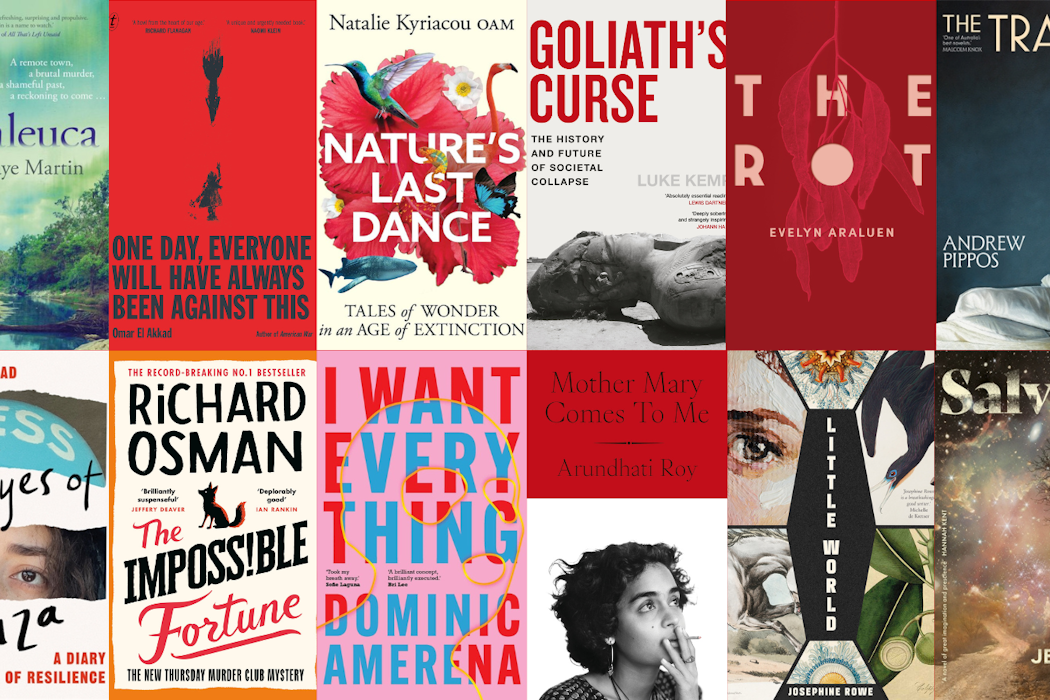
We found out the favourite 2025 books of 35 expert readers – and the Books & Ideas team shares our own picks, too.
James Ley, Deputy Books + Ideas Editor, The Conversation, Jo Case, Senior Deputy Books + Ideas Editor, The Conversation
1 December 2025
The end of the year means holiday celebrations, summer breaks … and for us, one important thing: best books lists. We asked 35 expert readers for their favourite picks, ranging from novelists to anthropologists, scientists to criminologists – and experts in politics, publishing and philosophy. The only rule? The book had to be published this year.
And the Books & Ideas team are sharing our own best books of 2025.
Books & Ideas editor Suzy Freeman-Greene’s best book is Arundhati Roy’s memoir, Mother Mary Comes to Me (Penguin Random House). Don’t be put off by the cheesy title – Roy re-enchants the genre, eyeing her dysfunctional parents and her political struggles with wit and poetic verve. (Honourable mention: Hasib Hourani’s charged book-length poem, Rock Flight).
Senior deputy editor Jo Case’s standout was The Transformations (Picador), Andrew Pippos’ big-hearted ode to the dying days of print journalism. It follows a wary, wounded, deeply kind subeditor as newspapers shrink and his solitary world widens to let people in – inviting rich complications. (Honourable mention: Olivia De Zilva’s blazingly original, smart-funny-sad debut autofiction, Plastic Budgie.)
We’d love to hear your best books of 2025 too – please share them in the comments at the end of this article.
Fiona Wright
Josephine Rowe’s Little World (Black Inc.) is a surprising, deft and quietly moving book: a novella about outsiders and exiles, told in triptych. It opens with the startling image of the incorruptible body of a child-saint arriving – in a horse float – at a remote desert property, before stretching out across time and space. Its characters are all relics of a kind, all struggling with contrition and connection. It is a technically brilliant, elegant work – one that has stayed with me all year.
Fiona Wright was the 2024-2025 Judy Harris Writer in Residence, Charles Perkins Centre, University of Sydney.
Sandra Phillips
So much spoke to me in Angie Faye Martin’s debut crime novel, Melaleuca (Harper Collins). Martin is of Kooma, Kamilaroi, and European heritage. A writer and editor, she delivers a clever insider understanding of racialised Australia, with a speciality in small-town cop culture. Melaleuca has staunch and loving Blakfella characters – and not one, but two crimes to solve. Sad at times, funny at others, it is intricate and well-paced in plot and subplot. Right up until the very end, it’s a thrilling read.
Sandra Phillips is associate dean, Indigenous and professor of publishing and communications, University of Melbourne.
Andrew Pippos
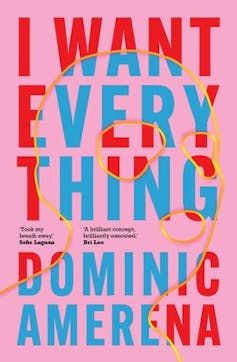
The title of Dominic Amerena’s debut, I Want Everything (Summit Books), neatly specifies the farcical ambitions that poison its characters. The interplay between the book’s two narrative strands is an impressive achievement: the Brenda Shale chapters carry a sober emotional weight, while the contemporary framing is playful, biting and fast-paced. This is a comic novel with serious things to say about art and gender.
Andrew Pippos is a lecturer in creative writing at the University of Technology Sydney.
Vijay Mishra
Heart Lamp (Scribe) by Banu Mushtaq, translated by Deepa Bhasthi, was originally written in Kannada, a “minoritarian” language spoken by over 65 million people in India. This collection of 12 stories offers an extraordinary tapestry, principally of the quotidian lives of anxiety-driven Indian Muslim women under the unwavering sign of patriarchy. Written in near-minimalist prose, the collection offers delicate accounts of cultural practices, from the rituals of worship, marriage, childbirth and circumcision, to the desire for a funeral shroud dipped in the holy Zamzam waters of Mecca. Deepa Bhasthi’s uplifting and aesthetically accomplished translation transforms Banu Mushtaq’s stories (phenomenal as they are in their source language) into a great work of art.
Vijay Mishra is emeritus professor of English and comparative literature, Murdoch University.
Emma Shortis
Less than a year into the second Trump administration, I am haunted by a line written by Canadian songwriter Rufus Wainwright: “I’m so tired of you, America.” We are all of us, I think, tired. Writing a book on the history of the US that cuts through the tiredness is always a Herculean task; this year, of all years, it should have been impossible. Somehow, with The Shortest History of the United States of America (Black Inc.), Don Watson has done it.
Emma Shortis is adjunct senior fellow, School of Global, Urban and Social Studies, RMIT University.
Intifar Chowdhury
After watching the Netflix adaptation of The Thursday Murder Club, I was hooked by its fresh, witty take on ageing, friendship and crime. So, when Richard Osman’s latest book in the series dropped, I couldn’t resist diving back into the world of Joyce, Elizabeth, Ron and Ibrahim. The Impossible Fortune is everything from quirky clever to utterly heartwarming. A wedding guest with a dangerous secret vanishes, pulling the club back into a whirlwind of mystery and unexpected twists. Osman delivers a page-turning thriller that balances suspense with humour and tenderness. It’s a story about loyalty, resilience and the thrill of chasing answers – even when life insists on slowing you down.
Intifar Chowdhury is lecturer in government, Flinders University.
Carol Lefevre
I read Joan Didion’s posthumous Notes to John (Fourth Estate) with enormous guilt for the invasion of privacy. But guilt aside, Notes reveals a new side of Didion. It documents a woman struggling amid the complex fallout of adoption, a mother who lives in daily terror that her adopted daughter will be lost. It explains the fear of loss that haunts Didion’s fiction, and shows the raw material she worked from in the more poetic Blue Nights. Didion may not have given her blessing to this book, which is an account of her sessions with a psychiatrist, but those who ushered Notes into the world did a good thing for those of us who adore her. It may be a source of solace, too, for many engaged in ongoing struggles with adoption.
Carol Lefevre is visiting research fellow, English and creative writing, University of Adelaide.
Peter Mares
Losing Big: America’s Reckless Bet on Sports Gambling (Columbia Global Reports) is a vivid case study of the harms wrought by online sports betting in the United States after the Supreme Court greenlit the industry in 2018. A landmark parliamentary report chaired by the late Peta Murphy MP documented similar damage in Australia. Yet two years on, the government has not acted on its bipartisan recommendations. Sometimes it helps to understand your own mess by studying someone else’s, so this is the book Australian politicians should read over summer.
Peter Mares is adjunct senior research fellow, School of Media, Film and Journalism, Monash University.
Elizabeth Finkel
Ian McEwan is my go-to writer for portraiture. In What We Can Know (Jonathan Cape), his canvas widens to civilisations – our current “deranged” one, hurtling eyes wide shut to imminent ecological collapse and AI-triggered nuclear wars – and the archipelago civilisation that follows, where scholars rely on electronic texts, rife with disinformation, to know (and ache for) the prelapsarian world. The title holds the key to the book: a meditation on the inherent murkiness of human knowledge, made infinitely worse by 21st-century tech.
Elizabeth Finkel is adjunct senior research fellow, School of Humanities and Social Sciences, La Trobe University.
Jumana Bayeh
Omar El Akkad’s One Day, Everyone Will Have Always Been Against This (Text Publishing) is confronting to read for a range of reasons. Some will see themselves in the heartache and confusion Akkad outlines. Others – perhaps most – will see themselves uncomfortably reflected in the complacency that caused Akkad his heartache. Providing insights into what it means to confront the genocide as an Arab in the West, this book outlines how liberal responses to the decimation of Gaza and its inhabitants are experienced by people like Akkad as betrayal, harmful silence and pain.
Jumana Bayeh is associate professor, Faculty of Arts, Macquarie University.
John Quiggin
“Enshittification” is the process by which once-useful parts of the internet, like Google, are degraded by the corporations that control them. It was Macquarie Dictionary’s Word of the Year in 2024. Cory Doctorow, who coined the term, has now written the definitive book on this disease, Enshittification: Why Everything Suddenly Got Worse and What To Do About It (Verso), describing its pathology, epidemiology and possible cures.
John Quiggin is professor of economics at the University of Queensland.
Joëlle Gergis
Few writers are skilful enough to articulate the complexity of the turbulent times we are living through. Even fewer provide genuine hope. There’s barely a page of Rebecca Solnit’s No Straight Road Takes You There (Granta) that I haven’t flagged to revisit her wisdom and insight. Solnit’s nuanced view of social change reminds us that every chapter in human history has challenged our moral integrity. These lyrical essays are inspiration for world-weary readers who know that giving up isn’t an option.
Joëlle Gergis is honorary associate professor of climate science at the University of Melbourne.
Tony Hughes-d'Aeth
My favourite book published this year was Evelyn Araluen’s The Rot (UQP). I’m tempted to call the book a fever dream, yet there is also something icily cold in the vision of these poems. The “rot” appears in the world as cascading injustice, from the bloodied rubble of Gaza to the escalating misery of the housing crisis. But the rot is also intimate and interior. Once we would have called it our soul.
Tony Hughes-d'Aeth is a professor and chair of Australian literature at the University of Western Australia.
Alice Grundy
Salvage (Picador) by Jennifer Mills is the perfect book to read on your summer holidays. It’s pacey and keeps you turning the pages, while you reflect on how you’re cooking on a heating planet. Salvage is a new genre for Mills, but it has the visceral descriptions readers will remember from her earlier novels, Dyschronia and The Airways, and characters you would love to road-trip with.
Alice Grundy is visiting fellow, School of Literature, Language and Linguistics, Australian National University.
Nick Haslam
“We are not getting sicker,” writes Suzanne O’Sullivan, author of The Age of Diagnosis (Hodder) – “we are attributing more to sickness.” A neurologist working at the clinical coalface, the author of this powerful book argues that over-diagnosis is rampant. Ranging from autism to ADHD to cancer screening, she finds our tendency to pathologise is doing more harm than good. Bracing without being polemical, The Age of Diagnosis pushes back against our diagnostic culture, offering practical remedies for health professionals and the wider public.
Nick Haslam is professor of psychology, University of Melbourne.
John Long
Goliath’s Curse by Luke Kemp (Viking) is both a sobering and utterly engaging account of the historical rise and fall of states. “Goliath States” succeed through violence or threatening it. Inequality leads to autocracy, which fuels Goliath States. Today, 71% of the population lives under autocracy, with more countries heading towards it. The conclusion is that the world will succumb to nuclear war or environmental collapse, unless more states become democratically governed and collaborate to avoid the apocalypse.
John Long is strategic professor in palaeontology, Flinders University.
Melanie Saward
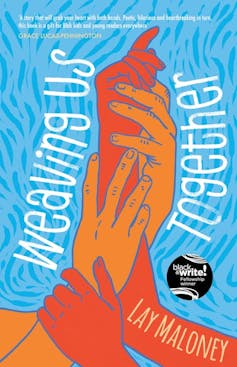
Weaving Us Together (Hachette) is the Blak, queer coming-of-age story I wish I’d had as a teenager. The story follows shy Aboriginal teen, Jean O’Reilly, as they adjust to life in a small, northern New South Wales town. Lay Maloney’s beautifully written novel (which won the 2022 blak&write! fellowship), somehow manages to be a gentle, safe place to land for young people exploring gender, sexuality and identity, while not shying away from inter-generational trauma, stolen children, police violence and racism. A must-read for schools, educators and young people.
Melanie Saward is a lecturer in creative writing at the University of Queensland.
Jindan Ni
Without any hesitation, my favourite book for 2025 is Ocean Vuong’s second novel, The Emperor of Gladness (Jonathan Cape). In the fictional US town of “East Gladness”, no one is “glad”. Along with the protagonist Hai, a college drop-out whose attempted suicide is interrupted by an elderly lady with dementia, Vuong compels readers to witness the vulnerable lives of many disadvantaged people. Yet despite their deep precarity, solace and love are generously provided beyond family ties. A heart-wrenching story with an incredible healing power.
Jindan Ni is senior lecturer, global and language studies, RMIT University.
John Woinarski
My best book this year was Nicolas Rothwell and Alison Nampitjinpa Anderson’s Yilkari: A Desert Suite (Text Publishing). There is mystery and meaning in the Australian landscape. Most of us are outsiders in this country, seeing only its superficialities, blind to its spirit, poorer for that lack of connection. At a glance, the western deserts are featureless, inhospitable, best travelled through on the unbending Gunbarrel Highway. Here, accompanied by quixotic guides and encumbered by the gift and genius of western high culture, a narrator recounts his quest to find the essence of this country, to fit into the land. The result is a haunting dream about our nature.
John Woinarski is professor of conservation biology, Charles Darwin University.
Sophie Gee
James Baldwin was a literary provocateur and also a crowd-pleaser; a Black radical and activist who loved Dickens and Dostoevsky; a gay man who lived in Paris, and a public voice for American civil rights. Nicholas Boggs’ extraordinary new biography of one of America’s greatest writers, Baldwin: A Love Story (Bloomsbury Circus), captures all these aspects of Baldwin’s life and writing, giving us a deep and moving account of a person whose life was riven by violence and filled with joy and glamour.
Sophie Gee is vice chancellor’s fellow, English literature, University of Sydney and professor of English at Princeton University.
Euan Ritchie
“Nature is not the backdrop to our lives; it is our lives.” This sentiment and insight from the preface of Nature’s Last Dance (Affirm Press) perfectly frames the strength and vital importance of Natalie Kyriacou’s book. The natural world is under siege, and Natalie describes heartbreaking examples. But ultimately, this book inspires – through thoroughly entertaining, sometimes joyous, well-researched examples of the extraordinary wonders and complexity of nature. Practical advice for readers to enact personal changes of their own fosters hope and empowerment. Bravo.
Euan Ritchie is professor in wildlife ecology and conservation at Deakin University.
Mia Martin Hobbs
Sunil Amrith’s The Burning Earth: An Environmental History of the Last 500 Years (Penguin) tells the story of how humanity has changed the planet we call home, untangling the environmental costs of empire, war, revolution and “progress” and revealing the devastating effects for the world’s poorest and most marginalised. Amrith shows how the human desire to control nature has, ironically, made our world less safe. The historical craft here is extraordinary: mind-bending and kaleidoscopic, The Burning Earth traverses the sweeping effects of colonisation, resource extraction, agriculture and development across every corner of the globe – while retaining individual stories of suffering and survival in the face of monumental environmental changes. Amrith’s work generates an urgent call to action to recognise the “crisis of life on Earth” before it is too late.
Mia Martin Hobbs is research fellow and historian of war and conflict, Deakin University.
Alexander Howard
Pierre Guyotat was one of postwar France’s most radical writers. Associated with the Tel Quel group and known for dense, hallucinatory prose that stretched language to breaking point, he made his name with Eden, Eden, Eden (1970) – a violent and apocalyptic text composed of a single, unbroken sentence running across 163 pages. At first glance, Idiocy (New York Review Books), his prize-winning coming-of-age memoir newly translated into English, seems formally restrained. However, a closer look reveals it to be just as intense and uncompromising. Spanning the years 1958 to 1962, the book traces his formative time in Paris and his experiences as a soldier in Algeria, where he was imprisoned for inciting desertion. Bearing witness to the atrocities of colonial conflict, Guyotat’s book feels disturbingly relevant right now.
Alexander Howard is senior lecturer, discipline of English and writing, University of Sydney.
Lynda Ng
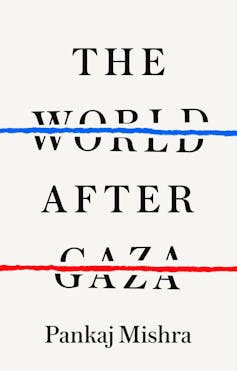
Can we call it a genocide? Who was there first? Are we allowed to talk about this? In a year when Gaza dominated the headlines and yet public discussion was decidedly curtailed, Pankaj Mishra’s The World After Gaza (Fern Press) made a fearless foray into Zionism and the question of Palestine. Mishra’s decision to tell the history of Israel as a settler-colonial state has been highly contentious. By defamiliarising Middle Eastern politics, he forces us to reflect on how the legacy of European colonialism continues to play out in the world today.
Lynda Ng is lecturer in world literature (including Australian literature), University of Melbourne.
Eve Vincent
The Seal Woman (Giramondo), republished in 2025, was originally published the same year as the Mabo decision: 1992. Dagmar, a Dane, is the novel’s protagonist. Living in a Victorian coastal town, Dagmar is filled with grief, desire and an obsessive interest in Norse mythology. She also undergoes an awakening about Aboriginal relations to ancestral Country. Beverley Farmer’s prose is incredibly focused and intricate. Reading of rockpools, seaweed, caves, spiders in the house, duplicity and selkies nourished and enlarged my imagination.
Eve Vincent is associate professor, anthropology, Macquarie University.
Tom Doig
Luke Kemp (originally from Bega, now based in Cambridge) has written an epic, sobering account of how and why human societies fall apart in Goliath’s Curse: The History and Future of Societal Collapse. Drawing on an exhaustive data set of 324 collapsed states, synthesising archaeology with psychology and political economy, he concludes that inequality, caused by corrupt elites, is the uniting feature. Any lessons for the present moment? Um, yep. While I’m usually sceptical of brief-history-of-everything books, Goliath’s Curse is a genuine joy to read. Pity about the ending (for us).
Tom Doig is a creative writing lecturer at the University of Queensland.
Juliet Rogers
Plestia Alqaad’s book Eyes of Gaza is not an easy read. It’s sad, painful and sometimes excruciatingly so. It is a book as witness; documenting the moments of trauma and violence in Gaza in the 45 days after October 7 2023. It shows this world through the eyes of a 23-year-old Palestinian journalist, describing a devastated landscape with nuance, with care and with the eye of someone who can read more than pain on people’s faces. Alqaad tells us of the occupation and the genocide but also the stories of camaraderie, of care, of collaboration between those who had lost everything. How can you share when you have nothing? It seems you can. Space, warmth, love and sometimes laughter are generated in proximity, even among terrible loss.
Juliet Rogers is a professor in criminology and director of the law and justice minor at University of Melbourne.
Natalie Kon-yu
Home – its myths and impossibilities – was at the heart of Arundhati Roy’s The God of Small Things, and is also the knotted centre of Mother Mary Comes to Me. In this memoir, Roy reveals the slippages that occur between fiction and nonfiction in writing a life. Roy’s mother, her country and her self form a set of nesting dolls that cannot nest, but cannot be understood without one another. A beautiful, generous book.
Natalie Kon-yu is a teaching and research associate professor in creative writing and literary studies.
Edwina Preston
My best book of 2025 is Shokoofeh Azar’s The Gowkaran Tree in the Middle of Our Kitchen (Europa). Azar’s second novel filled me with wonder and horror, and gave me entry to a strange, beautiful and wondrous world: that of the ancient Zoroastrian culture as it butts up against the murderous modern regimes of Ayatollah Khomeini and Ali Khamenei. A profoundly beautiful and harrowing work.
Edwina Preston is a novelist and PhD candidate in the School of Culture and Communication, University of Melbourne.
Julian Novitz
I Want Everything (Summit Books), Dominic Amerena’s blackly funny and acutely well observed satire of Melbourne literary life, struck close to home for me this year. I Want Everything explores Australian literary history and contemporary writing lives with an uncompromising eye as Amerena’s unnamed narrator attempts to extract material for an “eminently fundable” book from his chance encounter with a famously reclusive and mysterious author. Brilliantly funny, it develops the pace and tension of a thriller, as gambits and deceptions start to pile up. Best debut and best novel of 2025 for me.
Julian Novitz is senior lecturer, writing, Swinburne University of Technology.
Jen Webb
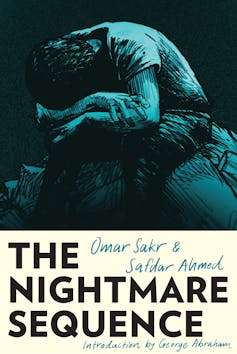
My pick is Omar Sakr and Safdar Ahmed’s The Nightmare Sequence (UQP). In a year marked by global levels of violence, both discursive and physical, Sakr and Ahmed use poetry and graphic art to express anger, truth-telling and tenderness. They remind readers that we humans are all in this together – and though “History is an angel with seven faces / All of them are turned away from us”, we can turn towards each other.
Jen Webb is distinguished professor emerita of creative practice, University of Canberra.
Matthew Sharpe
Most people are happy enough to accept the latest gadgets coming to us from Silicon Valley without asking too many questions about what the people who run the companies might think. Science journalist Adam Becker is not one of those content to “wait and see what happens”. In More Everything Forever: AI Overlords, Space Empires, and Silicon Valley’s Crusade to Control the Fate of Humanity (Basic Books), he probes the ideas of the “techbros” and their cheerleaders. And the news is not comforting. Claiming the mantle of science and backed by billions of dollars, these ideas are often troubling melanges from sci-fi, futurism and racist pseudoscience, whose implications for life as we know it are far from beneficent.
Matthew Sharpe is associate professor in philosophy, Australian Catholic University.
Allanah Hunt
Moonlight and Dust (Allen & Unwin) by Jasmin McGaughey is a fantasy novel that’s enticing from its first page with its dark academia and ecological themes. Set in stunning Cairns, the author’s strong voice weaves together a mystery about a young Torres Strait Islander girl who comes to life in the words, along with her endearing family.
Allanah Hunt is lecturer, Aboriginal and Torres Strait Islander Studies Unit, University of Queensland.
Wanning Sun
In Breakneck: China’s Quest to Engineer the Future (Allen Lane), Dan Wang gives you a new lens through which to view China and US-China competition. Conceptualising China as an engineering state and America as a lawyerly society, Wang shows that China’s strengths are as impressive as its weaknesses are disturbing. But Wang does not take sides: Breakneck argues China has learned from the West, and now the West should learn from China. Whether or not you agree with him, it is likely to be a thought-provoking – even eye-opening – read.
Wanning Sun is professor of media and cultural studies, University of Technology Sydney.
Julienne van Loon
A yoga teacher, a poet and a long-time reader of French philosopher Gilles Deleuze, Antonia Pont has delivered us an idiosyncratic and delightful new non-fiction book. With A Plain Life: On Thinking, Feeling and Deciding (New South), Pont advocates for plainness. That is, for a stance in which we decide for ourselves “that one’s life is intrinsically ‘enough’”. It’s a book about expectations and about capacities, including “unlearning meanness” in the context of our neoliberalist age. I believe the best books become not just an accompaniment, but a living companion: this is one such book.
Julienne van Loon is associate professor in creative writing, University of Melbourne.
This article is republished from The Conversation under a Creative Commons license.