A new way to measure the age of dolphins opens a window onto the lives of these iconic animals
New research has developed the first molecular ‘clock’ for common dolphins. It could be a game-changer for conservation.
Evi Hanninger, PhD Candidate in Marine Science, Te Kunenga ki Purehuroa – Massey University, Emma Betty, Research Officer in Cetacean Ecology, Te Kunenga ki Purehuroa – Massey University, Karen A Stockin, Professor of Marine Ecology, Te Kunenga ki Purehu
14 November 2025
Knowing the age of an animal reveals key information about how long it lives and when it reproduces.
But figuring out the age of wild animals is not easy, especially for dolphins.
Common dolphins in the wild.Auckland Whale and Dolphin Safaris, CC BY
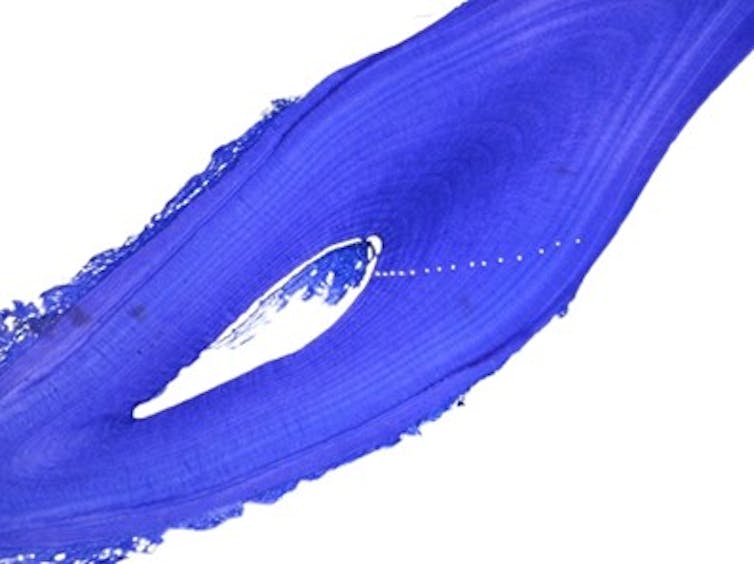
Until recently, researchers had to slice the teeth of dead dolphins and count growth layers, much like tree rings.
This method becomes more problematic in older animals because teeth wear and the growth layers sit closer together, which can lead to dolphins’ age being underestimated. It is obviously also impossible to extract teeth from living dolphins.
In our new research, we linked DNA markers with known tooth ages of dead dolphins to build the first molecular “epigenetic clock” for common dolphins (Delphinus delphis).
This allows scientists to estimate the age of living common dolphins from just a skin sample, opening a new window onto the lives of these iconic animals.
But this research also raises two key questions: could the limitations of tooth-based ageing affect the accuracy of the clock, and does DNA degradation in dead animals influence the age estimates? Our work addresses both concerns.
How DNA becomes a clock
New DNA-based techniques are transforming how scientists estimate age by reading tiny chemical changes in DNA that change predictably as animals grow older.
Researchers have studied these DNA patterns in hundreds of mammal species and developed epigenetic clocks – reliable tools that estimate age without having to remove teeth or use invasive methods.
The yellow dots mark individual growth layer groups (similar to tree rings) in a common dolphin tooth, each representing one year of age.Massey University, CC BY
While epigenetic clocks are now emerging for dolphins, these DNA changes have only been studied in a few species so far. Until now, no epigenetic clock has existed for common dolphins – one of the world’s most widespread dolphin species.
This is because scientists first need skin samples from animals whose ages are already known to build these clocks.
A handful of studies used tooth ages from dead dolphins, but this has historically raised questions about the effect of decomposition, and also whether errors in tooth ageing older animals may affect accuracy of the DNA clocks.
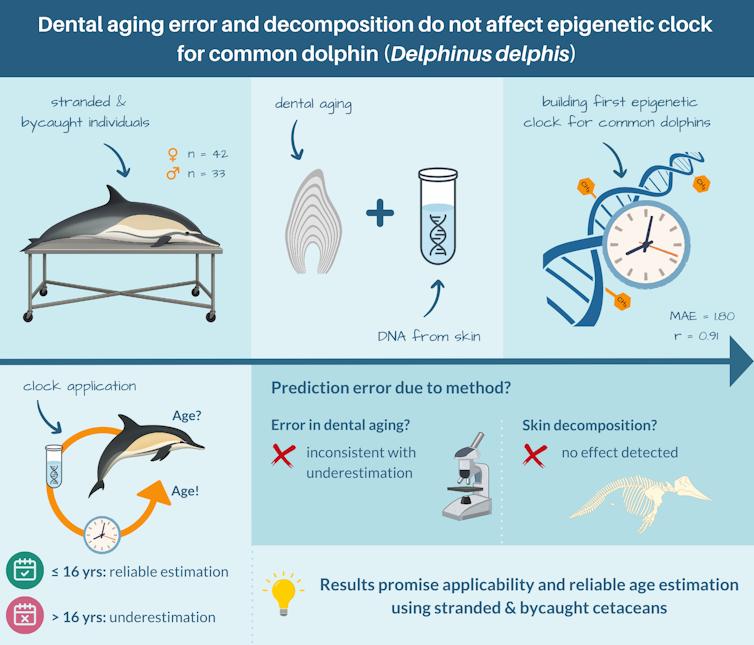
To address these concerns, we analysed 75 common dolphins that had stranded or been accidentally caught in fishing nets in New Zealand. For each animal, we counted growth layers in teeth to determine age and used a skin sample to measure DNA markers at almost 38,000 sites across the genome.
We combined these data to build a model that estimates age from DNA to create an epigenetic clock for common dolphins.
Putting the clock to the test
Our clock can predict age to within about two years, although estimates became less precise in older dolphins.
This brings us back to our key question: is this due to less accurate tooth ageing in older animals, or because DNA breaks down after death?
In our study, the clock tended to underestimate the age of older dolphins. However, if tooth ageing were the problem, we would expect the opposite — that the DNA clock would give older ages than tooth readings.
This makes dental ageing errors unlikely. We also tested whether skin decomposition affected age estimates, and found no effect.
We built the first DNA-based age clock for common dolphins, addressing issues of tooth ageing and postmortem samples for clock calibration.Massey University, CC BY
Why then are older dolphins underestimated? This is a biological effect seen in many species. The DNA changes that track age become more gradual later in life, which means the clock has fewer signals to work with.
It’s not caused by teeth or decay, but because ageing slows naturally at the molecular level.
A game changer for dolphin conservation
Our findings address longstanding concerns about whether tooth ages are reliable to calibrate epigenetic clocks. We show the method is genuinely robust, even when using stranded or by-caught dolphins.
This means DNA age clocks can be built for animals whose ages are only known from tooth readings. This is important because for many dolphin species, tooth records from dead animals are the main or only method scientists have to determine an individual’s age.
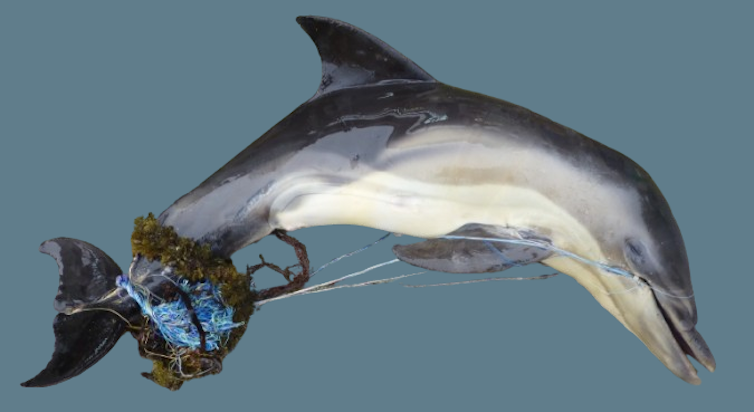
A common dolphin entangled in fishing line.Massey University, CC BY
This molecular clock is a major step forward for conserving common dolphins.
Scientists can now determine age from minimally invasive biopsy samples and, in turn, estimate survival and reproductive rates in free-ranging wild dolphins.
Common dolphins are one of the most widespread dolphin species on Earth and have long been considered abundant. But they face significant human pressures globally and are increasingly vulnerable.
In New Zealand and across Australasia, they are among the most frequently caught dolphins in fisheries bycatch. Experience from other regions such as the Mediterranean Sea shows that even “common” species can decline rapidly under sustained pressures such as overfishing, pollution and habitat degradation.
Being able to accurately estimate age from a small skin sample means scientists can better understand how long common dolphins live, when they reproduce and how many young survive. Such information is critical for protecting populations before they decline.
The authors do not work for, consult, own shares in or receive funding from any company or organisation that would benefit from this article, and have disclosed no relevant affiliations beyond their academic appointment.
This article is republished from The Conversation under a Creative Commons license.